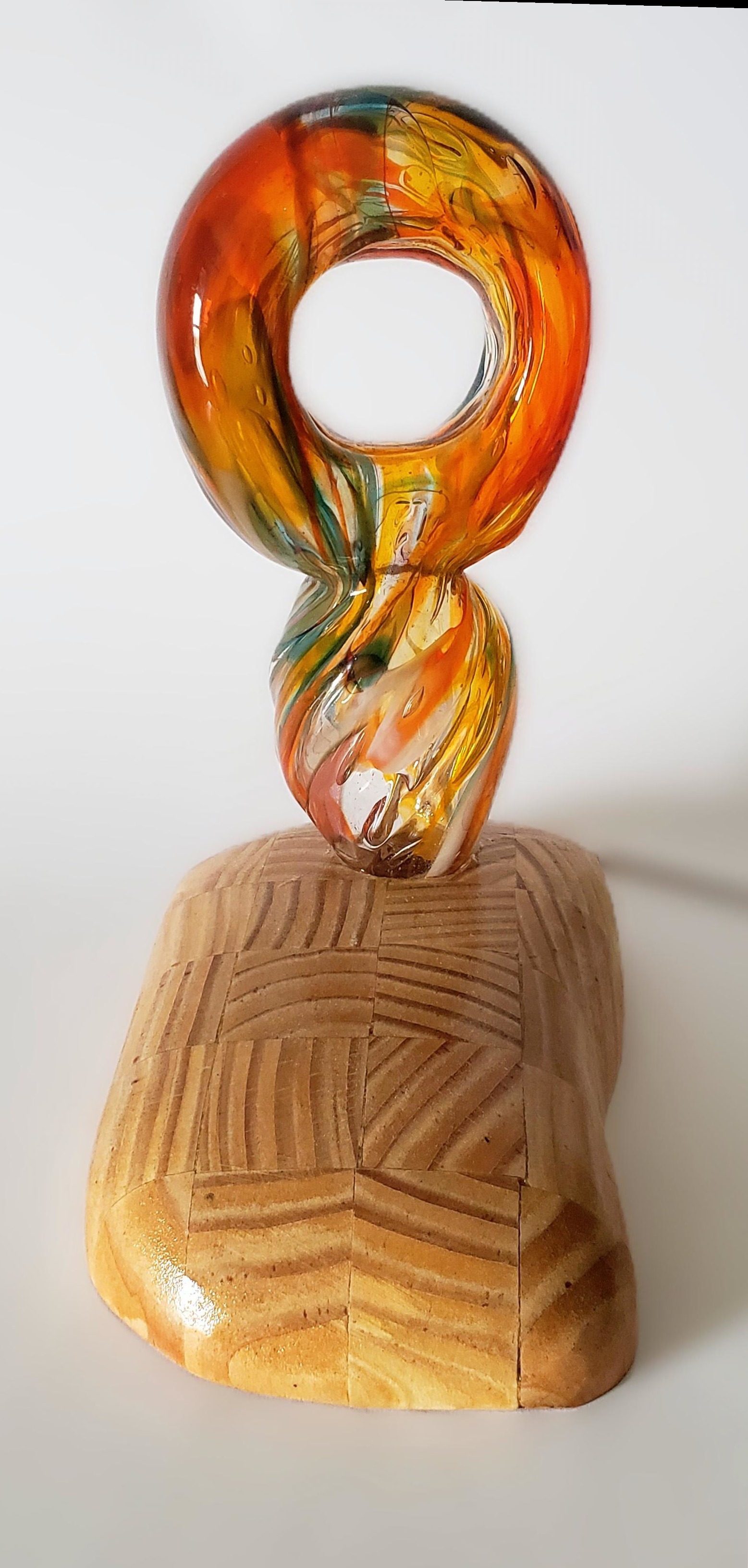
Orange Portal
Recycled Glass / Fir 2026
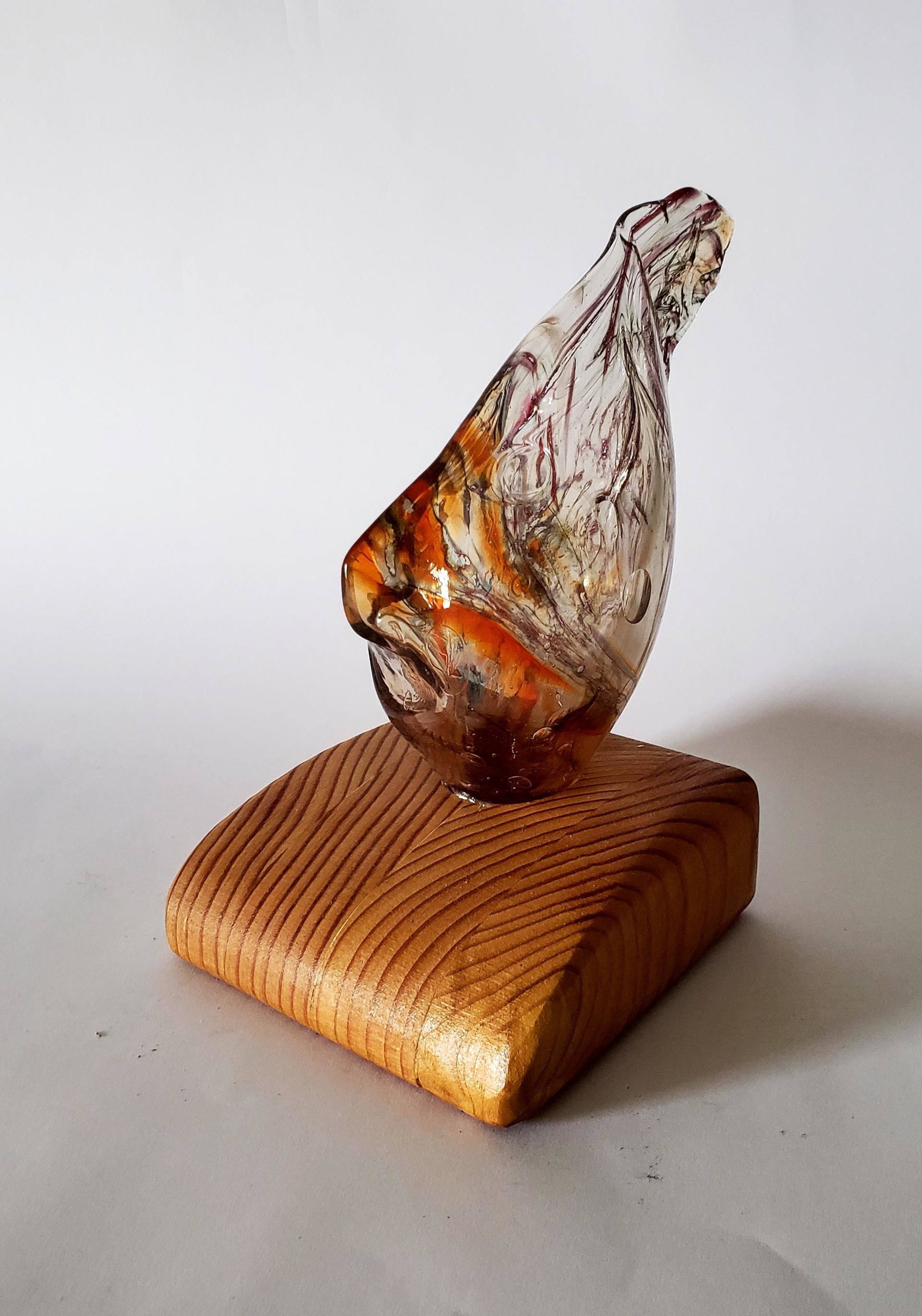
Chanticleer Head
Recycled Glass / Fir 2024
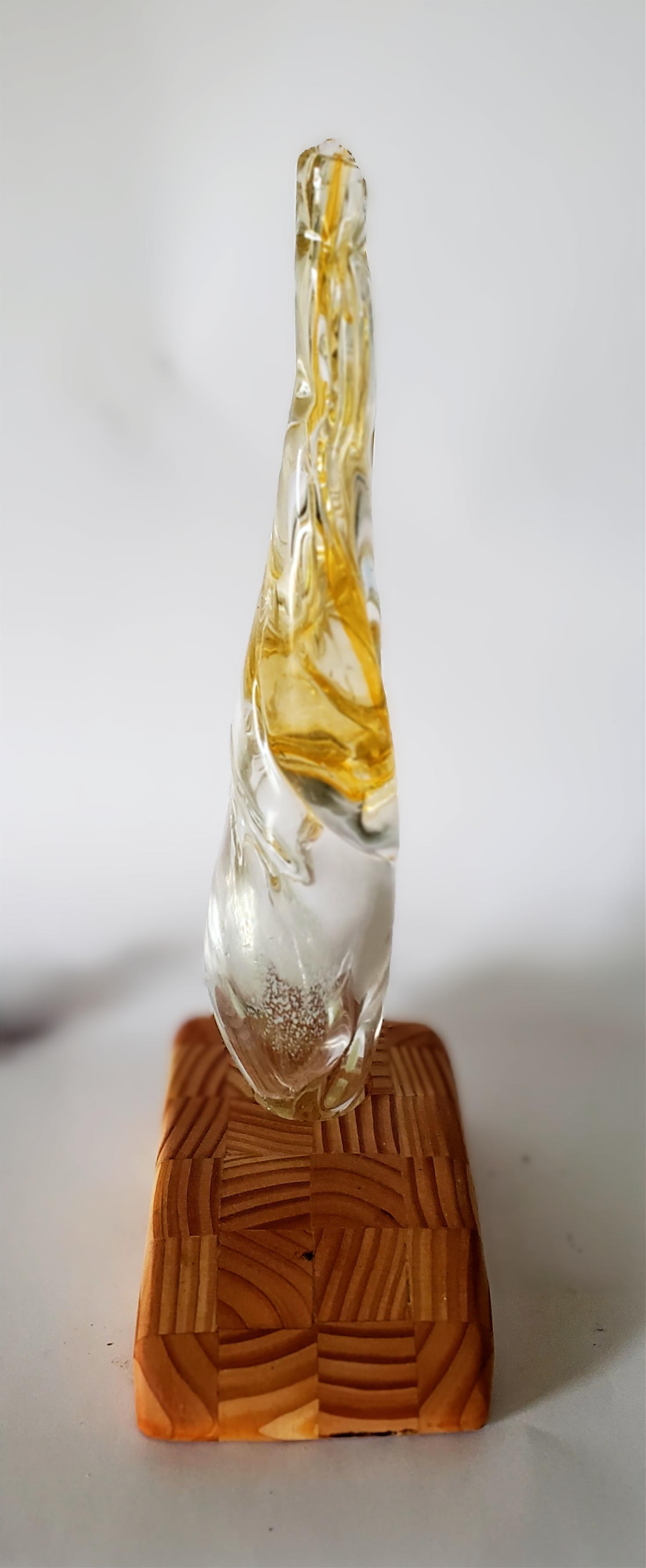
Golden Spire
New Glass 2023 / Fir 2024
Fir trees produce relatively soft, lightweight wood commonly used for paper pulp, framing lumber, and general carpentry. Douglas Fir, by comparison, is significantly denser and stronger, making it one of the most valued structural timbers in heavy construction. Fir species — particularly Spruce-Pine-Fir (SPF) and Douglas Fir — are also widely used in the manufacturing of durable shipping pallets due to their strength, stability, and reliability under load.
My interest in fir began during the COVID period, when I rescued part of an old pallet from a lumber yard scrap bin. After removing countless nails and screws, I became fascinated by the exposed end grain and the unexpected complexity within the material.
That discovery led me to begin milling the wood into sections on a table saw and reassembling the fragments into layered geometric patterns that now form these sculptural bases. The process is slow and labour-intensive, requiring repeated cutting, gluing, trimming, and refinement.
What continues to draw me to the material is the transformation itself — taking wood intended for industrial utility and exposing qualities that would otherwise remain unseen. In the repetition of grain, scars, fastener marks, and compressed fibres, I see both the history of the material and a quiet form of resilience.
Orange Portal
Recycled Glass / Fir 2026
Chanticleer Head
Recycled Glass / Fir 2024
Golden Spire
New Glass 2023 / Fir 2024
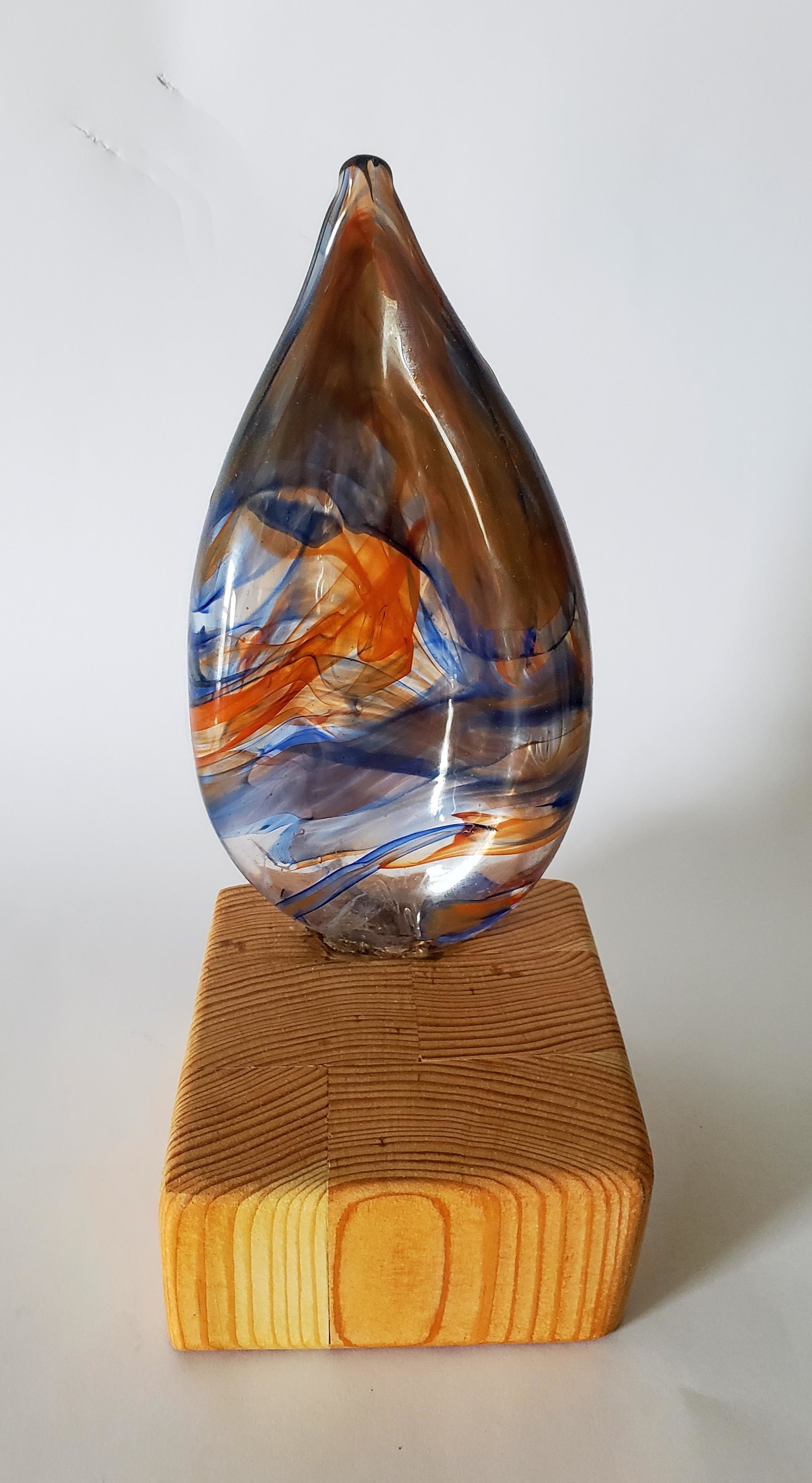
Blue / Orange Leaf
Recycled Glass / Box-Elder 2025
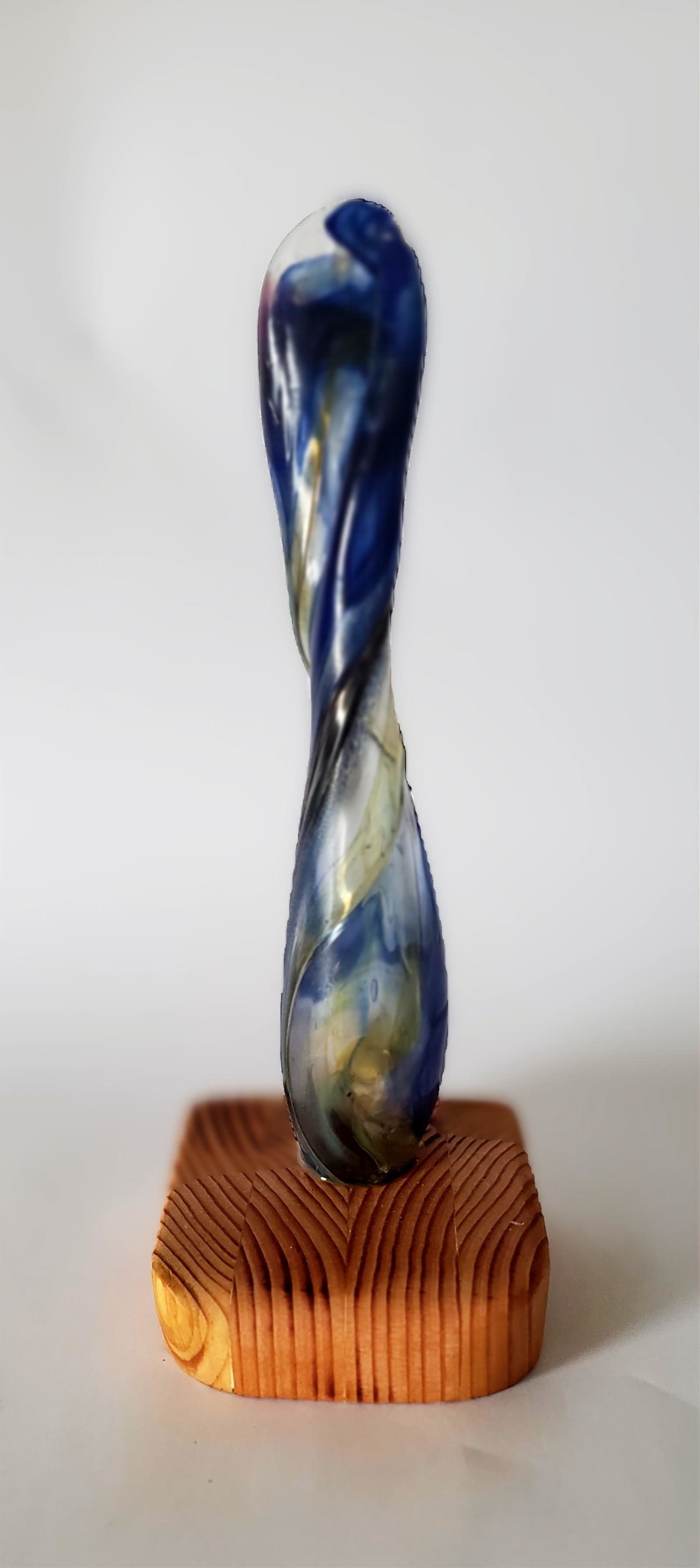
Twisted Blue Spire
Recycled Glass / Fir 2024
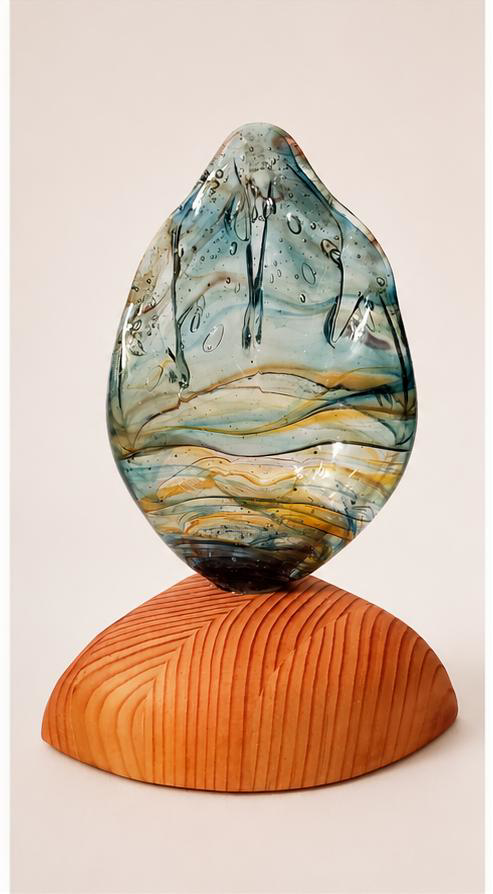
Leaf Hand Form
Recycled Glass 2025 / Fir 2024
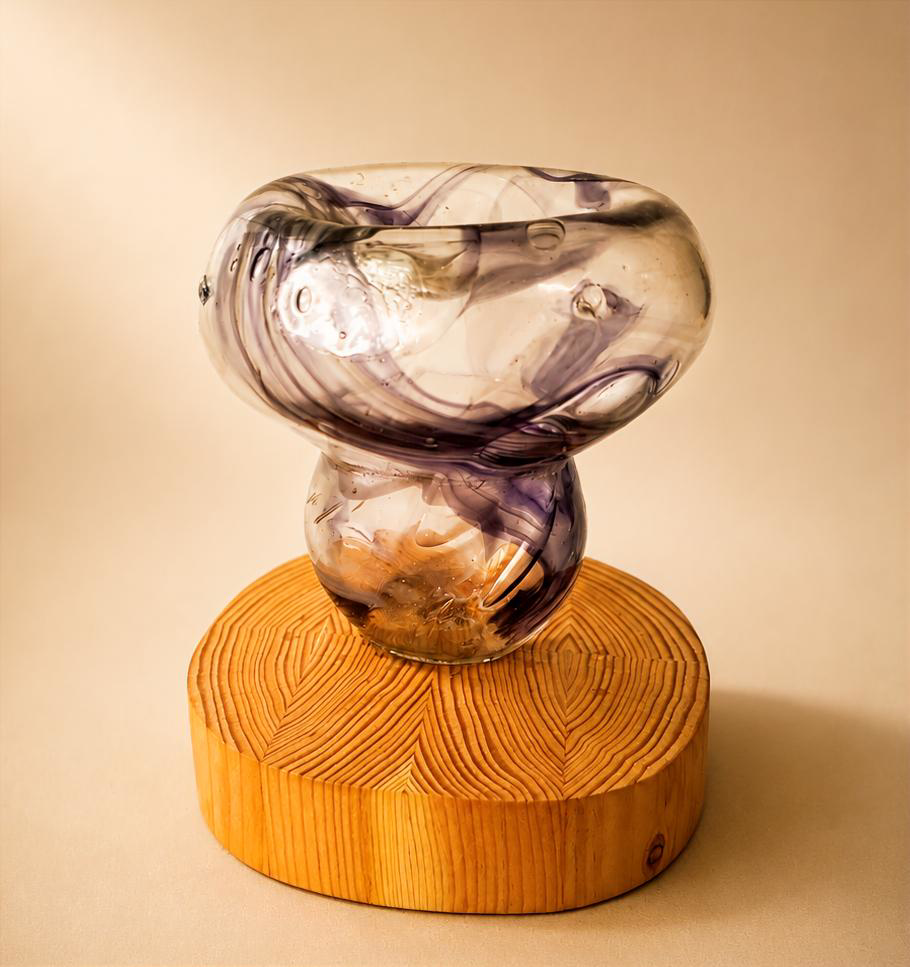
Purple Aurora Light
Recycled Glass / Reclaimed Fir 2025